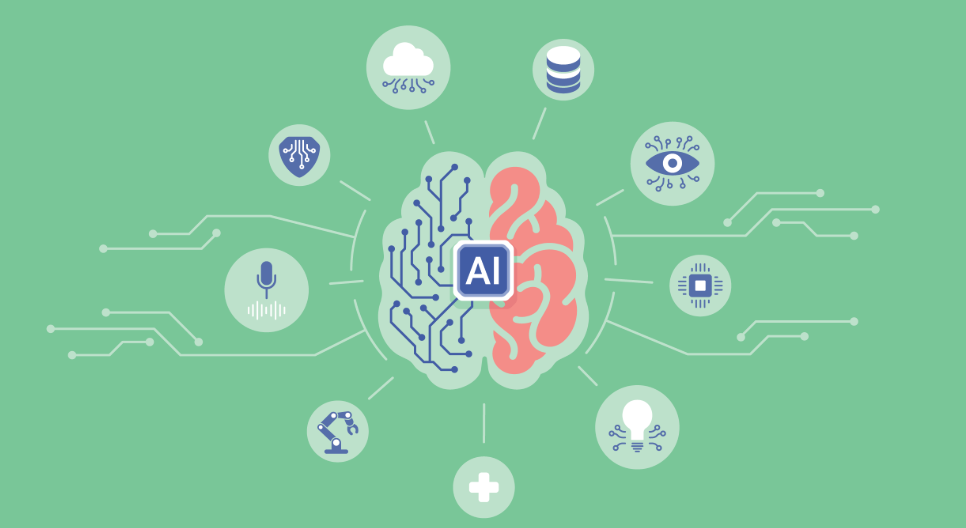
The landscape of technology is rapidly evolving, with several advancements poised to reshape industries and societal structures by 2025. Key innovations such as artificial intelligence, quantum computing, and 5G connectivity will play pivotal roles. However, these technologies also introduce complex challenges related to ethics, governance, and workforce adaptation. Understanding their implications will be crucial as society navigates this transformative period. What remains to be seen is how these developments will balance progress with responsibility.
Artificial Intelligence and Machine Learning
As industries increasingly integrate advanced technologies, artificial intelligence (AI) and machine learning (ML) stand out as pivotal forces shaping the landscape of innovation by 2025.
With advancements in deep learning and reinforcement learning, AI applications will enhance predictive analytics.
However, ethical AI and AI governance must address machine bias and data privacy concerns, ensuring responsible use of natural language processing and neural networks in transformative ways.
See also: Top 10 Cybersecurity Threats to Watch in 2025
Quantum Computing
While many technologies are poised to revolutionize industries by 2025, quantum computing emerges as a particularly transformative force, promising to redefine computational capabilities.
Achieving quantum supremacy, it enables complex problem-solving beyond classical limits. Moreover, advancements in quantum cryptography offer unprecedented security for data, safeguarding information in an increasingly interconnected world.
This dual impact positions quantum computing as a critical factor in future technological landscapes.
5G and Next-Generation Connectivity
The advent of G and next-generation connectivity is poised to revolutionize the digital landscape by significantly enhancing mobile broadband experiences.
This transformation will not only support the proliferation of IoT devices but also facilitate the development of smart cities, enabling seamless communication and data exchange.
Furthermore, the low latency applications that emerge from these advancements will redefine real-time interactions across various sectors, from healthcare to entertainment.
Enhanced Mobile Broadband Experience
With the advent of 5G and the anticipated rollout of next-generation connectivity technologies, the landscape of mobile broadband is set to undergo a transformative shift.
5G advancements promise enhanced speeds and lower latency, significantly enriching the mobile gaming experience.
This evolution not only caters to gamers seeking seamless play but also empowers users with greater freedom to access high-quality content anytime, anywhere.
IoT and Smart Cities
As cities evolve into interconnected ecosystems, the integration of Internet of Things (IoT) technologies alongside next-generation connectivity is poised to redefine urban living.
Smart infrastructure enhances urban mobility and energy efficiency, while sensor networks facilitate effective data management and environmental monitoring.
Connectivity solutions bolster public safety and digital governance, fostering citizen engagement and creating a sustainable future for urban environments.
Low Latency Applications
How will low latency applications reshape the landscape of connectivity in the coming years?
These applications leverage edge computing to deliver real-time analytics, facilitating instantaneous data processing and decision-making.
This shift will empower industries, enhance user experiences, and enable innovative solutions, driving autonomy and creativity.
As connectivity evolves, low latency will become essential for seamless interactions and the realization of a truly interconnected world.
Augmented and Virtual Reality
Although augmented and virtual reality (AR and VR) have been in development for several years, their potential to transform various industries is only beginning to be realized.
These technologies offer immersive experiences that enhance learning, training, and entertainment.
With a growing array of interactive applications, AR and VR are poised to redefine user engagement, empowering individuals to explore and create in unprecedented ways.
Blockchain Technology
The advancements in augmented and virtual reality have paved the way for a deeper exploration of innovative technologies like blockchain.
This decentralized technology is revolutionizing sectors, particularly decentralized finance and supply chain management. By providing transparent, secure transactions, blockchain enhances trust and efficiency, enabling individuals and businesses to operate with greater autonomy.
Such developments promise to reshape economic landscapes by empowering users with unparalleled freedom.
Advanced Robotics and Automation
The integration of autonomous systems is poised to redefine operational frameworks across various industries by enhancing efficiency and precision.
As these advanced robotics systems become more prevalent, their impact on workforce dynamics will necessitate a reevaluation of skill sets and employment models.
This transformation presents both challenges and opportunities, highlighting the need for strategic adaptation in workforce planning.
Autonomous Systems Integration
As industries increasingly embrace automation, the integration of autonomous systems is transforming the landscape of advanced robotics.
Smart logistics and robotic process automation are now essential components, enhancing efficiency and responsiveness.
This integration empowers organizations to optimize operations, reduce costs, and adapt swiftly to market demands, ultimately fostering a landscape where innovation and operational freedom thrive.
The future of automation looks promising.
Workforce Transformation Impact
While organizations harness advanced robotics and automation to streamline operations, the impact on workforce transformation is profound and multifaceted.
Remote work and hybrid environments necessitate skill development and digital collaboration, promoting workforce diversity.
However, job displacement raises concerns about employee well-being.
To mitigate these effects, organizations must prioritize training programs and agile methodologies in their talent acquisition strategies, ensuring a resilient workforce.
Internet of Things (IoT)
With an estimated 75 billion connected devices expected by 2025, the Internet of Things (IoT) stands poised to revolutionize how individuals and industries interact with technology.
Smart home integration will enhance everyday living, while industrial IoT will optimize operations and drive efficiency in manufacturing.
This interconnected landscape promises greater convenience and productivity, ultimately empowering users to embrace a more liberated, tech-driven existence.
Biotech Innovations
Biotech innovations are set to transform healthcare and agriculture significantly by 2025.
Advancements in gene editing and CRISPR applications will enhance personalized medicine and biopharmaceutical development.
Synthetic biology and regenerative medicine will revolutionize health diagnostics, while microbiome research and vaccine technology promise improved disease resistance.
Together, these innovations in biomanufacturing will foster a more resilient and efficient future for global health and food security.
Renewable Energy Technologies
As advancements in biotechnology pave the way for improved health and food security, the renewable energy sector is poised for transformative growth by 2025.
Innovations in solar energy, wind power, and biofuels, alongside enhanced energy storage and geothermal heating, will drive efficiency.
Integrated smart grids and carbon capture technologies, supported by renewable incentives, will revolutionize hydropower systems, promoting a sustainable energy future.
Autonomous Vehicles
As autonomous vehicles become increasingly prevalent, they present a complex landscape of safety and regulatory challenges that must be addressed to ensure public trust.
The economic implications are profound, potentially transforming job markets while also fostering new opportunities in technology and infrastructure.
Innovations in this field continue to drive advancements, but their integration into society demands careful consideration of both benefits and risks.
Safety and Regulation Challenges
The rapid advancement of autonomous vehicles presents significant safety and regulation challenges that must be addressed before widespread adoption can occur.
Regulatory frameworks and safety standards require development, alongside considerations for ethical implications and compliance challenges.
Effective risk management and technology governance are essential to navigate privacy issues and liability concerns, ultimately fostering public trust through robust enforcement mechanisms and clear accountability.
Economic Impact and Jobs
Addressing safety and regulation challenges is just one aspect of the broader implications of autonomous vehicles, particularly their potential economic impact.
These vehicles could drive economic growth while simultaneously causing job displacement, necessitating skill development to prepare the workforce.
As sectors transform, remote employment and entrepreneurship opportunities may increase, promoting workforce diversity but also risking income inequality in a rapidly evolving labor market within the innovation economy.
Technological Advancements and Innovations
While autonomous vehicles promise to revolutionize transportation, their technological advancements reveal a complex interplay of innovation and practicality.
Sustainable technologies and digital transformation drive these vehicles, yet ethical implications and privacy concerns loom.
As innovation ecosystems evolve, issues of tech accessibility and cybersecurity advancements shape societal impact, challenging stakeholders to balance freedom with responsibility in this rapidly changing landscape.
Conclusion
In conclusion, the convergence of cutting-edge technologies heralds a transformative tide for 2025. As artificial intelligence and machine learning, alongside quantum computing and 5G, forge new frontiers, societies must simultaneously navigate ethical enigmas and workforce upheavals. The promise of augmented reality and autonomous vehicles offers significant strides in efficiency and engagement, yet responsible regulation and skill specialization are essential. Ultimately, balanced breakthroughs will be pivotal in ensuring progress promotes prosperity and public trust in an increasingly digital domain.