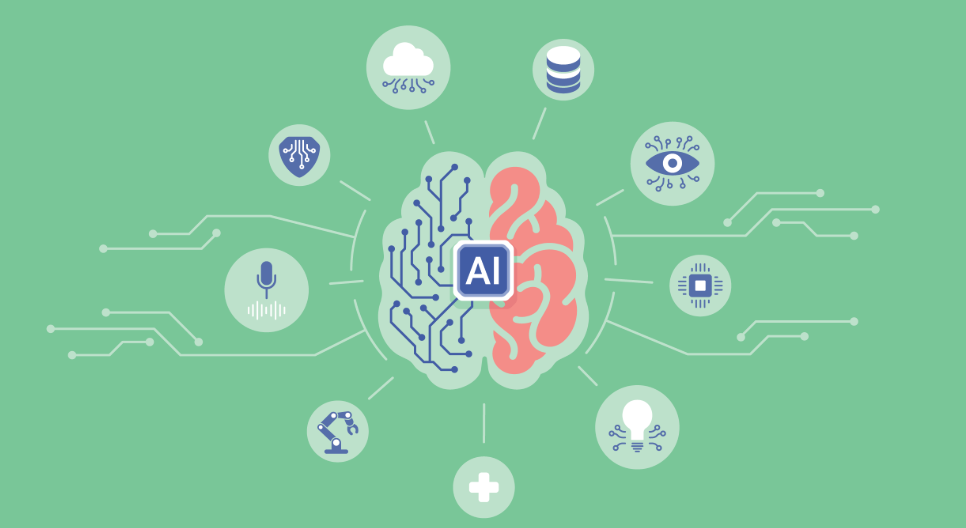
Artificial Intelligence (AI) represents a significant advancement in technology, enabling machines to mimic human cognitive functions. It relies on complex algorithms and data analysis to learn from experience, adapt to new inputs, and make decisions autonomously. This growing field spans numerous applications, from automating tasks in industries to enhancing user experiences. Understanding these mechanisms is crucial, as their implications for society are profound and far-reaching. What lies ahead for AI and its integration into daily life?
Understanding the Basics of Artificial Intelligence
Artificial intelligence (AI) represents a pivotal advancement in technology, fundamentally altering how machines process information and perform tasks.
At its core, AI leverages machine learning and neural networks to enable systems to learn from data, adapt to new inputs, and enhance their performance autonomously.
This capacity for self-improvement empowers users, promoting a sense of freedom in exploring innovative applications across diverse fields.
See also: Top 10 Emerging Technologies Shaping 2025
Key Technologies Behind AI
The foundation of artificial intelligence is built upon several key technologies that drive its functionality and effectiveness.
Machine learning enables systems to learn from data, adapting to new information autonomously.
Meanwhile, neural networks, inspired by the human brain, facilitate complex pattern recognition and decision-making processes.
Together, these technologies empower AI to perform tasks that enhance efficiency and innovation across various domains.
Applications of AI in Various Industries
AI applications span a multitude of industries, revolutionizing processes and enhancing productivity.
In healthcare, innovations such as predictive analytics and personalized medicine are improving patient outcomes and operational efficiency.
Meanwhile, finance automation leverages AI for risk assessment, fraud detection, and trading optimization, streamlining transactions and decision-making.
These advancements demonstrate AI’s potential to transform traditional practices, fostering greater efficiency and effectiveness across sectors.
The Future of Artificial Intelligence
As industries increasingly adopt AI technologies to enhance their operations, the trajectory of artificial intelligence suggests profound changes on the horizon.
The potential for job displacement raises ethical implications, necessitating a careful examination of how society adapts.
Future developments in AI must balance innovation with the need for responsible implementation, ensuring that freedom and opportunity remain at the forefront of technological advancement.
Conclusion
In conclusion, artificial intelligence stands as both a powerful tool and a complex challenge, embodying the duality of innovation and ethical considerations. While its ability to analyze data and automate tasks promises efficiency and progress across industries, the potential for misuse and the need for responsible governance cannot be overlooked. Thus, as AI continues to evolve, the balance between harnessing its transformative capabilities and addressing societal implications will define its future trajectory.