
Most Australian founders have a growth plan in their heads. But getting it out of their head and into a real business structure is where things get challenging. That means getting serious about SME strategy, business funding in Australia, and the right team, early.
And to be honest, a lot of early-stage founders are so focused on the product that the business side catches them completely off guard.
At Australian Business Magazine, we cover the entrepreneurship insights and practical strategies Australian founders need to grow with confidence. This article covers the planning, funding, and leadership moves worth paying attention to.
So, ready to get into it?
What Does Australian Startup Growth Look Like?
Australian startups are growing fast. The local ecosystem now ranks 12th globally, and that opens up real options for founders across the country, instead of just in the major cities.
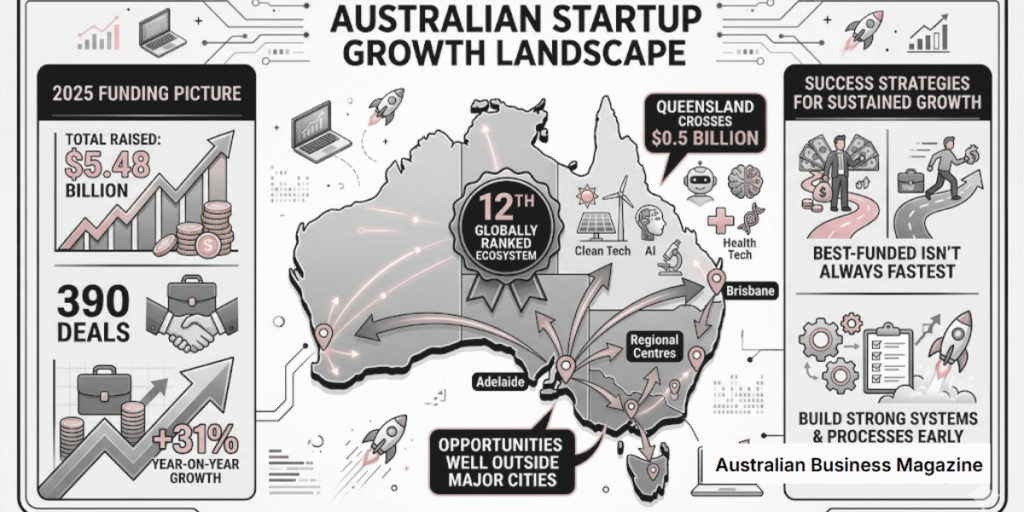
From what we’ve seen, the founders who grow fastest aren’t always the best-funded ones. Let’s look at what’s happening out there.
The 2025 Funding Picture
In 2025, local startups raised $5.48 billion across 390 deals, up 31% year on year.
To be more specific, that growth isn’t concentrated in one place. For instance, Queensland crossed the half-billion mark for the first time, with serious investment flowing into clean tech, AI, and health tech right across the country.
Beyond Sydney and Melbourne
Small business founders are expanding into new markets with growing confidence. Adelaide, Brisbane, and even regional centres are producing serious startups now.
In short, real opportunities exist well outside the major cities. For early-stage founders, that’s a significant shift down the track. We suggest you get your systems and processes in place early, and your business stands a much stronger chance of sustained growth.
Now that you know where the market sits, the next question is how to plan for it.
How Does a Strategic Planning Process Set You Up Early?
A strategic planning process sets you up early by giving your business a clear direction before the pressure builds. Most founders skip this step and jump straight into execution mode. But the wrong plan early on sets everything else back.

Three things make this process more manageable:
- Set a 90-Day Priority List: Annual plans fall apart fast in practice. So, break your strategy into 90-day cycles instead. Small businesses that plan this way spot problems early and adjust before they get expensive.
- Define Your Revenue Model Early: Who pays, how often, and why would they choose you over other businesses? Document the answers before you spend a single dollar. After all, vague assumptions here are where most early-stage funding gets wasted.
- Assign Clear Team Responsibilities: A strategy without ownership goes nowhere. You should assign specific responsibilities to your leadership team for each goal, set firm deadlines, and build in a monthly review. That keeps everyone aligned and accountable when growth pressure builds.
A written plan with real ownership behind it is what turns a good idea into a business that can expand with confidence.
Breaking Down Business Funding in Australia
Business funding in Australia covers government grants, private loans, and even venture capital. And believe it or not, the federal government puts close to $1 billion a year into grants alone.
Here’s a quick breakdown.
| Funding Type | Repayment Required | Best For |
| Government Grants | No | Early-stage small business growth |
| Bank/Business Loans | Yes | Expansion and equipment costs |
| Venture Capital | No, but equity given | High-growth startups seeking scale |
Most founders go straight to loans without checking which grants they’re eligible for first. Find what’s available through grants and programs on business.gov.au and apply early.
Beyond funding, the leadership team you build around your business determines whether your SME strategy holds up under pressure.
How Do Strong Leadership Teams Drive SME Strategy Forward?
Strong leadership teams set the tone for how your business handles pressure. They keep priorities clear, communication open, and departments aligned when things get busy. A CEO who defines team responsibilities early builds a culture of accountability. And that’s the kind of structure small businesses genuinely need to grow.
Without alignment, even a well-funded SME strategy falls apart. Goals get missed, confidence drops, and the team loses direction. A focused leadership team gives everyone a clear role and the capacity to grow with the business.
Of course, even the best leadership team needs current information to make good decisions. Staying informed is what keeps your strategy relevant.
How Do You Stay Up to Date Without Losing Focus?
Staying up to date means focusing on what moves your business forward. This is why we recommend you keep tabs on funding deadlines, the right industry reports, and market shifts that could affect your revenue before you see them coming.
Start with these three habits.
- Track Funding Changes Regularly: Grant rounds open and close fast. So set a monthly reminder to check business.gov.au and keep a simple log of programs your business is eligible for.
- Follow Industry Reports: The ABS publishes free quarterly data on small business performance across key sectors. Cross-reference those numbers with your own revenue to spot strategy gaps early.
- Refine Your Strategy With Data: Schedule a one-hour monthly review of your business numbers against broader market trends. Medium enterprises that do this consistently catch problems early and keep their SME strategy on track.
Time and again, founders who review their numbers monthly make faster, more confident decisions. One monthly review can reveal a funding gap, a pricing issue, or a market shift before it becomes a real problem.
Put simply, a simple repeatable process keeps your business informed, prepared, and ready to grow. And with the right plan, funding, and team in place, the next step is putting it all together for the long haul.
Ready to Build Something That Lasts?
Growing a startup in Australia is genuinely challenging. Between finding the right funding, building a focused plan, and assembling the right team, there is a lot to get right. The support and resources are out there.
This article covered the Australian startup landscape, strategic planning, business funding options, leadership teams, and how to stay up to date. Each piece connects directly to building a stronger, more confident business.
Our team at Australian Business Magazine walks you through every strategy, funding option, and growth insight you need to build something that lasts.
Take the first step, and you’ll be surprised where it leads.